The Art of Speaking While Terrified
The first time I read the news on live television, my hands were ice cold and my voice sounded like it belonged to someone else. What I learned about fear, performance, and psychological flexibility.
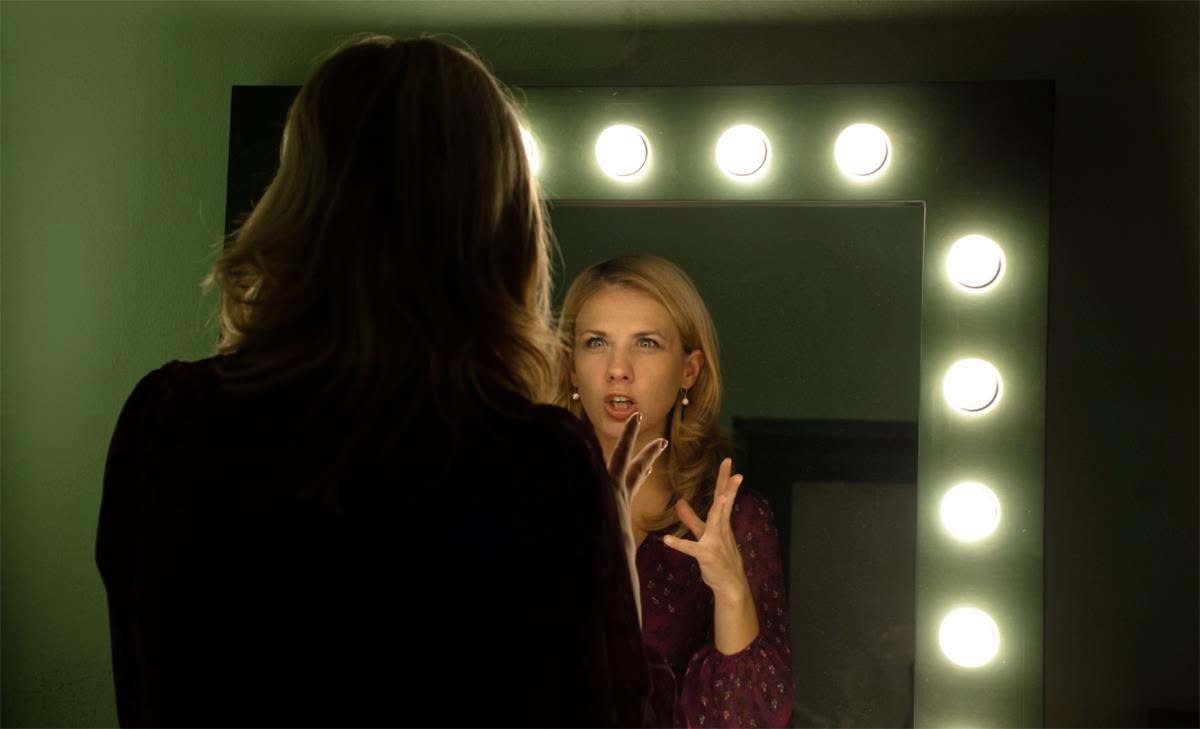
The dressing room mirror — where every broadcaster confronts themselves before stepping on air.
The first time I read the news on live television, my head was pounding. My hands were ice cold, and I could hear the hollow echo of my own voice bouncing back through my ears.
I was convinced that every tiny twitch of my head would be magnified on a thousand screens, that everyone would see that I was a fraud. My voice sounded uncomfortably high-pitched, as if my vocal cords had tightened. The words kept threatening to disappear — there simply was not enough air in my lungs to push them out.
But I had to do it. It was just too important to me to give up on.
Have you ever felt that? That moment where you are terrified, your body is totally betraying you, but you keep going anyway? If so, you have already experienced a profound psychological phenomenon.
After months and months of reading the news every single day, the fear completely vanished. The studio became my second home. It became routine. It even became a little boring. I told myself: I am cured. Public speaking will never scare me again.
Wrong.
I was invited to host a conference. It was a new environment, a different kind of stage, a live audience. I accepted lightly, confidently. I do this for a living, I thought. This will be easy.
But just before I stepped onto that stage, boom.
"You are scared? Great. Let us learn to do it while extremely scared."
My heart started pumping hard. Something in my body shifted into survival mode, just like that very first day in the TV studio.
But this time, I was shocked and offended. I thought: What the hell? I do this for a living! But I did not try to calm myself down. I was simply surprised and amused by my body's reaction. And within a few minutes, the fear settled down on its own. I will not lie — the adrenaline was definitely present — but it no longer stole my voice. It walked with me, but it no longer controlled me.
The Military Principle: Action and Uncertainty Can Coexist
If I had known about Steven C. Hayes and this approach back then, I would have given myself a good pat on the back for stepping into that studio with such a big fear. But I did not. So now, I have the opportunity to give this wisdom to you.
What happened in that studio — me sitting there terrified, but still reading the news — was actually a demonstration of a concept called psychological flexibility, which Hayes and his colleagues were trying to formalise back in the 1980s.
"Fear and execution can go together. Do not wait for the fear to leave — act now."
Basically, Steven would say to me: You are scared? Great. Let us learn to do it while extremely scared. Stop trying to calm down. You need to learn that fear and execution can go together. Do not wait for the fear to leave — act now.
Hayes and his team identified a key problem with modern mental health: we often treat our internal feelings as the enemy. Instead, they proposed that the path to high performance — whether in therapy, sports, or journalism — is to hold our fears lightly while acting on our values.
Military training is a good example here because soldiers are trained to perform under extreme conditions — they learn to take action instead of freezing, even when fear and uncertainty are overwhelming. That is psychological flexibility: the ability to feel fear without letting it dictate your behaviour. The same applies to public speaking — you do not need to calm down first; you need to learn to speak while your heart is pounding, because your goal matters more than your discomfort.
The next time you feel your heart pounding before you speak, do not try to calm down. Just look at the audience, accept the noise in your head, and start talking. And if the fear comes back after a year of silence — like it did for me — do not be surprised. Just nod at it, say I see you, and step forward anyway. Your mind will catch up with your actions soon enough.
Let me take you forward.
About the Author

Nada Zekovic
Nada Zekovic is a TV presenter, MC, keynote speaker, and CIPD-certified trainer and coach based in Dubai. She has lived and worked across the UAE, Qatar, and Oman, and brings over a decade of experience in front of the camera and on international stages. She works with leaders, teams, and organisations across the Gulf and beyond to help them communicate with clarity, confidence, and lasting impact.